Daniel Lucius Doc Adams — Father of Modern Baseball, Biography
1814 – 1899 · Physician · Rulemaker · Father of Modern Baseball
Daniel Lucius "Doc" Adams
The physician who wrote the rules of baseball — and whose name was missing from the historical record for 116 years.
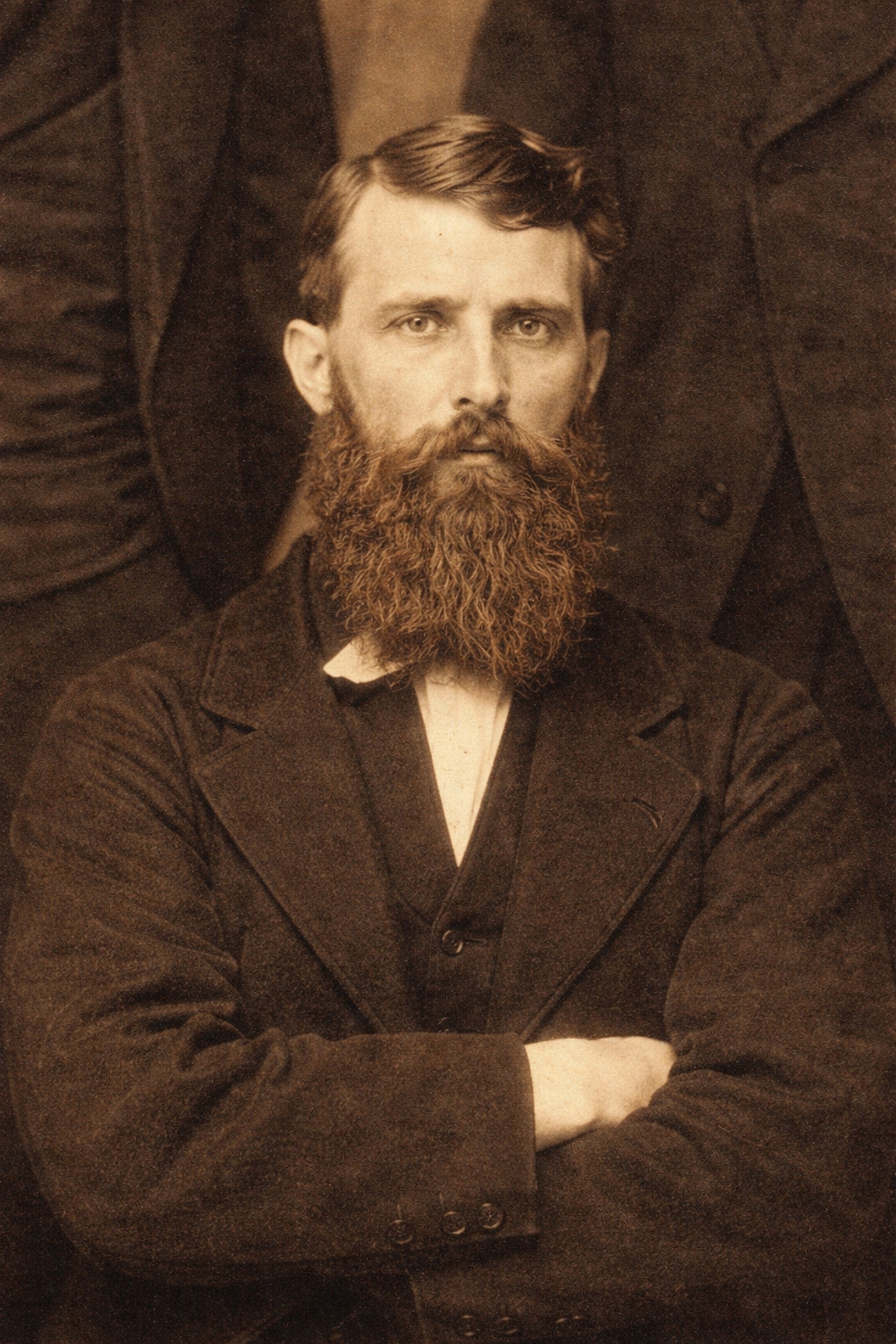
Daniel Lucius Adams
November 1, 1814 — January 3, 1899
Physician · Knickerbocker B.B.C.
The Man Behind the Rules
A Physician Who Shaped America's Game
Daniel Lucius Adams was born in 1814 in Mont Vernon, New Hampshire, the son of a physician and educator. He studied at Yale and earned his medical degree from Harvard in 1838, establishing a practice in New York City that he would maintain for decades.
In 1839, Adams encountered baseball being played informally in Manhattan. He was immediately drawn to the game and began playing regularly. When the Knickerbocker Base Ball Club was formed in 1845 — the first organized baseball club in America — Adams was among its founding members.
He rose quickly within the club, serving as its president and taking on primary responsibility for the rules. Over nearly a decade, he refined and codified the game: fixing the base paths at ninety feet, standardizing the roster at nine players, inventing the shortstop position, and establishing nine innings as the game's length.
In January 1857, Adams presented these laws at the first Baseball Convention in New York City. Fourteen clubs attended. His laws were adopted without significant amendment. Every game of baseball played since — at every level, in every country — has been played under rules that Adams wrote.
He retired from baseball in 1862 and returned to his medical practice. He died in New Haven, Connecticut, on January 3, 1899, at the age of 84. His name was not in the history books. It would take 116 more years for the record to be corrected.
His Lasting Legacy
What Adams Gave the Game
The Shortstop Position
Adams invented the shortstop position out of practical necessity — early baseballs were soft and didn't carry far, so a fourth infielder was needed to relay throws from the outfield. As balls improved, the position evolved into its modern form.
90-Foot Base Paths
Adams fixed the distance between bases at ninety feet — a specification so perfectly calibrated that it has never been changed. The margin between safe and out on a ground ball to first remains, to this day, a fraction of a second.
Nine Players Per Side
Early baseball was played with varying numbers of players. Adams standardized the game at nine per side, creating the defensive alignment — four infielders, three outfielders, pitcher, catcher — that defines baseball to this day.
Nine Innings
Before Adams, games were often played to 21 runs rather than a fixed number of innings. Adams replaced this with nine innings, giving the game its modern structure, pacing, and dramatic arc.
A Life in Baseball
Timeline of Doc Adams
Born in Mont Vernon, New Hampshire
Daniel Lucius Adams is born on November 1, 1814, in Mont Vernon, New Hampshire, to a family of physicians. His father, Dr. Daniel Adams, was a prominent educator and author of arithmetic textbooks.
Graduates from Yale College
Adams graduates from Yale College and goes on to study medicine at Harvard Medical School, following his father's path into the medical profession.
Earns Medical Degree from Harvard
Adams receives his medical degree and establishes a practice in New York City, where he will spend the most consequential years of his life — both as a physician and as a ballplayer.
Discovers Baseball in New York
Adams encounters the nascent game of baseball being played informally in Manhattan. He is immediately captivated and begins playing regularly with a loose group of enthusiasts.
Joins the Knickerbocker Base Ball Club
Adams joins the newly formed Knickerbocker Base Ball Club — the first organized baseball club in America. He quickly becomes one of its most active and influential members.
Plays in the First Recorded Baseball Game
Adams plays in the first formally recorded baseball game at Elysian Fields in Hoboken, New Jersey — the Knickerbockers versus the New York Nine. The game establishes the template for organized baseball.
Elected President of the Knickerbockers
Adams is elected president of the Knickerbocker Base Ball Club, a position he holds for several years. In this role he takes on sole responsibility for developing and refining the rules of the game — work that would culminate in the Laws of Baseball presented at the 1857 Convention.
Years of Rule Development
Over nearly a decade, Adams works to refine and codify the rules of baseball. He is responsible for establishing the shortstop position, fixing the distance between bases at ninety feet, and standardizing the number of players at nine per side.
Presents the Laws of Baseball
Adams presents The Laws of Baseball at the first Baseball Convention in New York City, attended by representatives of fourteen clubs. His laws — including nine players, ninety-foot bases, and nine innings — are adopted without significant amendment and become the foundation of the modern game.
Retires from Baseball
Adams retires from active participation in baseball, returning his full attention to his medical practice. His contributions to the game are not formally recognized during his lifetime.
Dies in New Haven, Connecticut
Daniel Lucius Adams dies on January 3, 1899, in New Haven, Connecticut, at the age of 84. His role in creating the rules of baseball is largely unknown to the public and to baseball historians.
Authorship Proven — 116 Years Later
Researchers definitively identify Adams as the primary author of the Laws of Baseball, connecting his name to the 1857 Convention document through cross-referencing of convention minutes, club records, and contemporary accounts. The historical record is finally corrected.
His Name Belongs in the Record Books.
Doc Adams shaped every game of baseball ever played. Help make sure the world knows his name.